Carlos “Patato” Valdés at 100: The Conga Innovator Who Changed Latin Music
On his 100th birthday, we remember Carlos “Patato” Valdés through two contributions that changed Latin music: Patato y Totico and his pioneering work on tunable congas.

This post is also available in:
 Español
On November 4, 2026, we celebrate the centenary of Carlos “Patato” Valdés, one of the most influential percussionists in Latin music history. Born in Havana, Cuba, in 1926, Patato was more than an extraordinary conga player. He was an innovator whose contributions helped transform both the sound of the conga and the possibilities of Afro-Cuban music.
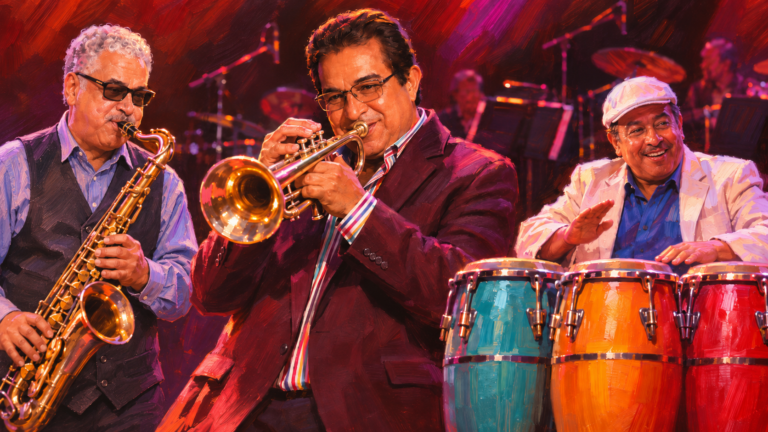
Throughout his career, Patato performed with some of the most important figures in Cuban music and Latin jazz. From his early years in Cuba to his extensive recording career in New York, he established himself as a master percussionist admired for his technique, creativity, and musical imagination.
Yet, as we remember Patato on his 100th birthday, two contributions deserve special attention: his historic recording with Eugenio “Totico” Arango and his pioneering work developing the tunable conga.
Patato y Totico: A Historic Meeting of Cuban Masters
In September 1967, Patato entered a New York recording studio with singer Eugenio “Totico” Arango to record what would become one of the most celebrated albums of Afro-Cuban rumba, Patato y Totico, commonly dated to 1968.
What makes this album particularly remarkable is the extraordinary gathering of musicians. Alongside Patato and Totico were two giants of Cuban music: Arsenio Rodríguez, the legendary tres player and bandleader, and Israel “Cachao” López, the influential bassist and composer.
According to NPR, this recording represents the only occasion when Patato, Arsenio, and Cachao played together, although my understanding is that Cachao’s participation was limited.
But the album was much more than a historic gathering. Patato wanted to take traditional rumba in a different direction. Rather than limiting the music to voices and percussion, he incorporated melodic instruments, creating an unusual combination that respected the rumba tradition while exploring new musical possibilities.
In a 1997 interview with Latin Beat, Patato explained his intention simply: “I wanted something progressive.”
The result was a recording that brought together different generations and approaches to Cuban music. Although it did not receive the recognition it deserved upon its original release, Patato y Totico eventually became recognized as an essential recording in the history of Afro-Cuban music.
For salsa fans, Patato y Totico offers another interesting connection. The songs “Dilo Como Yo” (renamed “Acere-Ko”) and “Ingrato Corazón” were later recorded by La Sonora Ponceña, appearing on their 1971 album Algo de Locura. Interestingly, Papo Lucca is a great admirer of Arsenio Rodríguez, who participated in the original recording. Algo de Locura also includes “Oye Mi Quinto”, written by Cuban folk group Los Papines. This connection provides another example of how the musical legacy of Cuba’s great masters continued to influence Puerto Rican salsa.
The Tunable Conga: Changing the Instrument Forever
Patato’s other great contribution was not a recording but an innovation that helped change how the conga could be played.
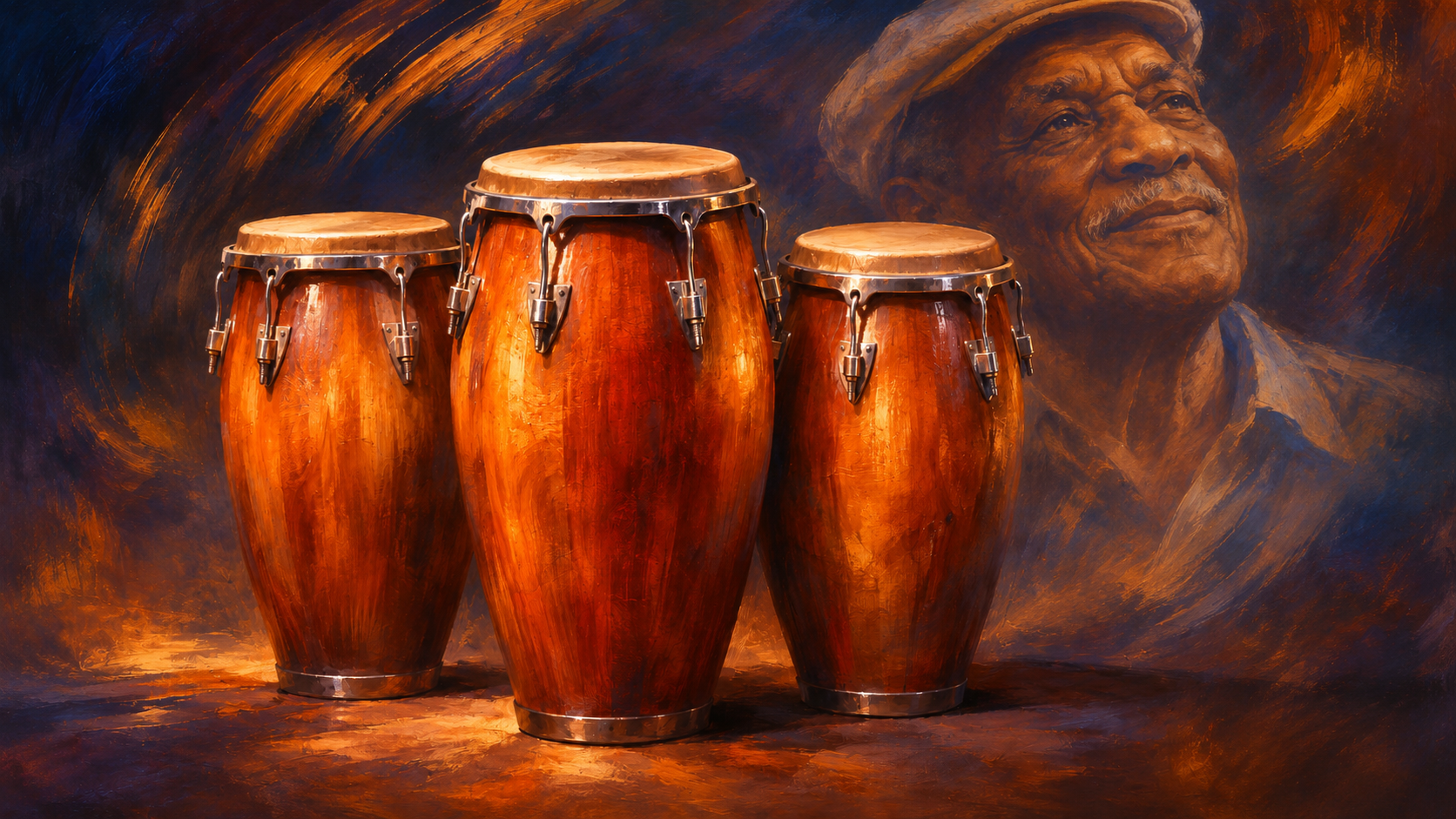
Traditionally, conga players adjusted the pitch of their instruments by heating the drumheads. This process was cumbersome, imprecise, and offered limited flexibility.
Patato envisioned something different: a conga that could be tuned mechanically, allowing musicians to control its pitch more precisely.
Beginning with experiments in Cuba, he helped pioneer the use of tuning hardware that tightened the drumhead through a metal hoop and adjustable keys. This innovation made it practical to tune multiple congas to different pitches and explore melodic possibilities that had previously been difficult to achieve.
Patato was particularly interested in playing musical phrases across several drums, expanding the conga beyond its conventional rhythmic role.
Although he is frequently credited with inventing the tunable conga, the precise origins of the mechanism remain uncertain. What is clear is that Patato was among its most important pioneers and popularizers.
His association with Latin Percussion founder Martin Cohen eventually led to the introduction of the Patato Model Congas in 1978, helping bring his ideas to percussionists around the world.
A Legacy That Continues to Resonate
Carlos “Patato” Valdés died in 2007, but his influence remains very much alive.
With Patato y Totico, he demonstrated how traditional Cuban rumba could embrace new musical ideas without losing its identity. Through his work with the tunable conga, he helped give percussionists greater control over their instruments and expanded their creative possibilities.
One hundred years after his birth, Patato deserves to be remembered not only for the rhythms he played, but also for the new possibilities he opened for generations of musicians who followed.